











about us
Mission, Innovation, Execution, Results.
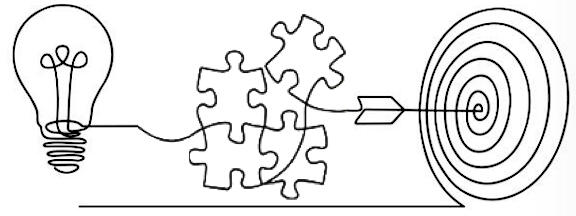
We align diverse stakeholders by speaking the four core “dialects” of successful industry-government collaboration: Mission, Technology, Acquisition, and Business

Mission First
It starts with the Mission, a clear purpose that defines success. Innovation only matters when it can be effectively applied to deliver real mission outcomes.
Acquisition Savvy
Great technology and deep domain expertise don't matter if you can’t navigate the acquisition process and get solutions deployed quickly and effectively.
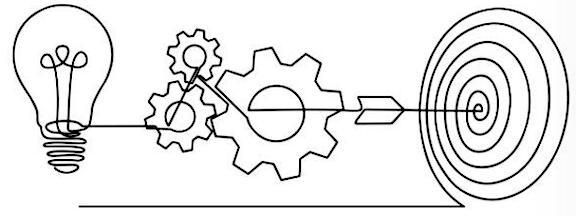
Technology Fluent
We bring deep domain and technical expertise to identify when and how emerging technologies can be applied to dramatically improve mission outcomes.

Business Minded
Lasting innovation depends on growth and business viability - we develop dual-use solutions with long-term value for business leaders and investors.
capabilities
Technical Expertise & Domain Knowledge
We integrate domain expertise, technical innovation, business acumen, and pragmatic execution to transform innovative ideas into transformational capabilities.

Open-Source Scientific & Technical Computing
We deliver high-performance computing solutions using Julia, Python, and R. We rapidly tailor open-source and dual-use technologies to meet unique mission requirements - spanning new concept development, implementation, and deployment for mission-critical programs.

AI & Scientific Machine Learning (SciML)
We leverage advanced AI capabilities and Julia’s SciML ecosystem to develop high-fidelity models for complex systems. By uniting domain knowledge with machine learning, we deliver solutions that are computationally efficient, physically consistent, and operationally relevant.
Digital Twins & Physics-informed Models
We apply Scientific Machine Learning to develop high-fidelity, data-integrated models of physical systems. By incorporating real-time data, we enable enhanced monitoring, predictive capability, and mission-aligned decision support across industrial and public sector environments.
Data Fusion & Real-Time Decision Support
We fuse diverse data streams into real-time, actionable intelligence through intuitive dashboards to enhance situational awareness. By integrating sensor, geospatial, historical data with predictive analytics, we help users quickly respond to complex environments.
Predictive Analytics & Industrial Controls
We develop high-fidelity digital twin solutions to support next-generation manufacturing and industrial process controls. We integrate predictive analytics with physics-based modeling to improve operational efficiency and quality control, and drive dramatic gains in performance.
Biomedical Research & Healthcare
We use data-driven modeling, physics-informed simulation and high performance computing to advance medical research in critically important areas that defy traditional medical research protocols or clinical trials - such as sepsis, critical casualty care and hemorrhagic shock.
CURRENT PROJECTS
MICROCAST
A Unified Hybrid Forecasting System for Naval Operations
Navy SBIR Topic N252-105:
Machine Learning Downscaling Capability for Environmental Forecasts

MICROCAST is an open-source Julia-based forecasting framework that integrates fast global physics, SciML, and high-resolution simulation:
SpeedyWeather for rapid spectral global forecasts and SciML models to refine and downscale to sub-km resolutions;
Oceananigans for GPU-accelerated Large Eddy Simulations (LES) of boundary-layer atmospheric and ocean dynamics to support ML supervision and validation;
Reactant to compile Julia into optimized kernels for portable execution across tactical edge-computing devices.
Objective: Develop a capability to generate near real-time environmental forecasts using modern Machine Learning Weather Prediction (MLWP), achieving <1 km horizontal resolution and ~10 m vertical resolution.MLWP applies data driven and hybrid AI approaches trained on historical observations and physics based simulations to learn atmospheric patterns and produce fast, high resolution forecasts. By combining neural operators and physics-informed loss functions, MLWP systems approximate complex atmospheric dynamics while dramatically reducing computational latency compared to traditional numerical weather prediction (NWP).Challenges of MLWP at 1 km resolution:
• Observations and labels: Limited access to consistent, high quality 1 km atmospheric and surface datasets constrains training, validation, and ongoing performance monitoring.• Small scale physics: Sub kilometer nonlinear processes are difficult to learn and generalize without explicit physics constraints or high resolution supervisory data.• Operational feasibility: Sustaining 5 to 15 minute update cycles requires optimized inference pipelines, streamlined data assimilation, and resilient deployment architectures suitable for constrained and edge compute environments.
CURRENT PROJECTS
HEATMAPS
High-Efficiency AI Twins for Modeling and Prediction via Surrogates
NSF ASCEND Climate Resilience Engine:
Applied Research and Development Program
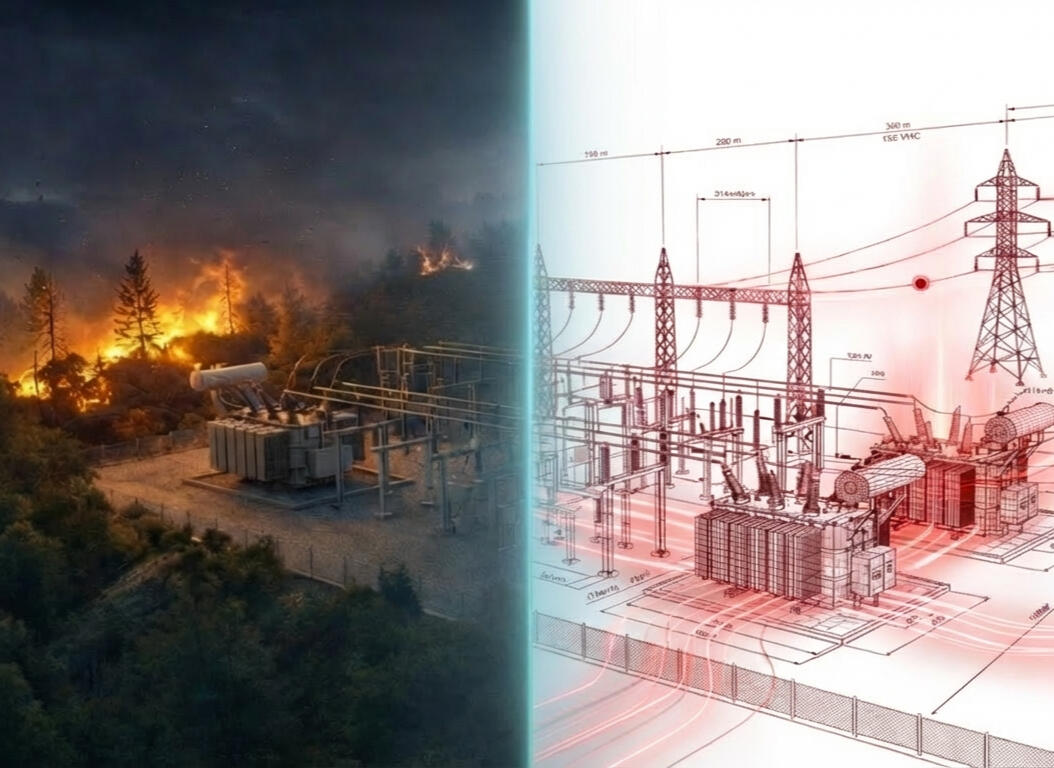
HEATMAPS is an open source, GPU optimized digital twin framework built in Julia with the Scientific Machine Learning (SciML) ecosystem. It integrates key wildfire drivers and converts physics based computations into deployable surrogate models using physics informed neural networks. The platform includes a surrogate model builder, a reusable model directory, and 2D and 3D visualization with sensitivity analysis, designed for deployment across GPU, edge, and mobile environments.
Objective: Develop an open digital twin framework that enables faster-than-real-time wildfire propagation modeling to support proactive decision-making for wildfire response and mitigation across the Colorado-Wyoming region.What Are Digital Twins?
Digital Twins are dynamic, virtual representations of physical systems, processes, or entities. They are used for real-time monitoring, simulation, prediction, and system optimization.Challenges Applying Digital Twins to Wildfires:
• Computational Demands: High-fidelity simulations often require costly HPC resources
• Real-Time Integration: Physical systems demand low-latency, bidirectional data sources
• Predictive Performance: Decision support systems require immediate updates to dynamic situations and enable “what if” scenario analysis with intuitive visual interfaces.
• Data Challenges:
Volume: Either too much data to manage or not enough to build effective models.
Latency: Delays in live updates to critical factors
Quality & Coverage: Limited or poor-quality data leads to suboptimal interventions
How we can we collaborate to achieve great things together?
Mission, Innovation, Execution, Results
Rallypoint One LLC is a qualified Veteran-Owned Small Business (VOSB) registered to do business with the Federal government on SAM.gov.
Unique Entity Identifier DSLQD119LYC5
DUNS 117481901
EIN 85-0554113
CAGE 8JY50Primary NAICS code:
541715: Research and Development in the Physical, Engineering, and Life Sciences (except Nanotechnology and Biotechnology)
Contact us!
Rallypoint has select opportunities for highly qualified domain experts who want to apply their expertise to meaningful problems using advanced simulation, AI/ML, and predictive analytics.
If you want to change the world solving hard problems with a great team, we want to connect!
Other NAICS Codes:
518210 – Data Processing, Hosting, and Related Services
541511 – Other Computer Programming Services
541519 - Other Computer Related Services
541512 - Computer Systems Design Services
541511- Custom Computer Programming Services
541513 - Computer Facilities Management Services
511210 - Software Publishers
Copyright © 2026 Rallypoint One LLC | All Rights Reserved